UI / UX Design
Drivison
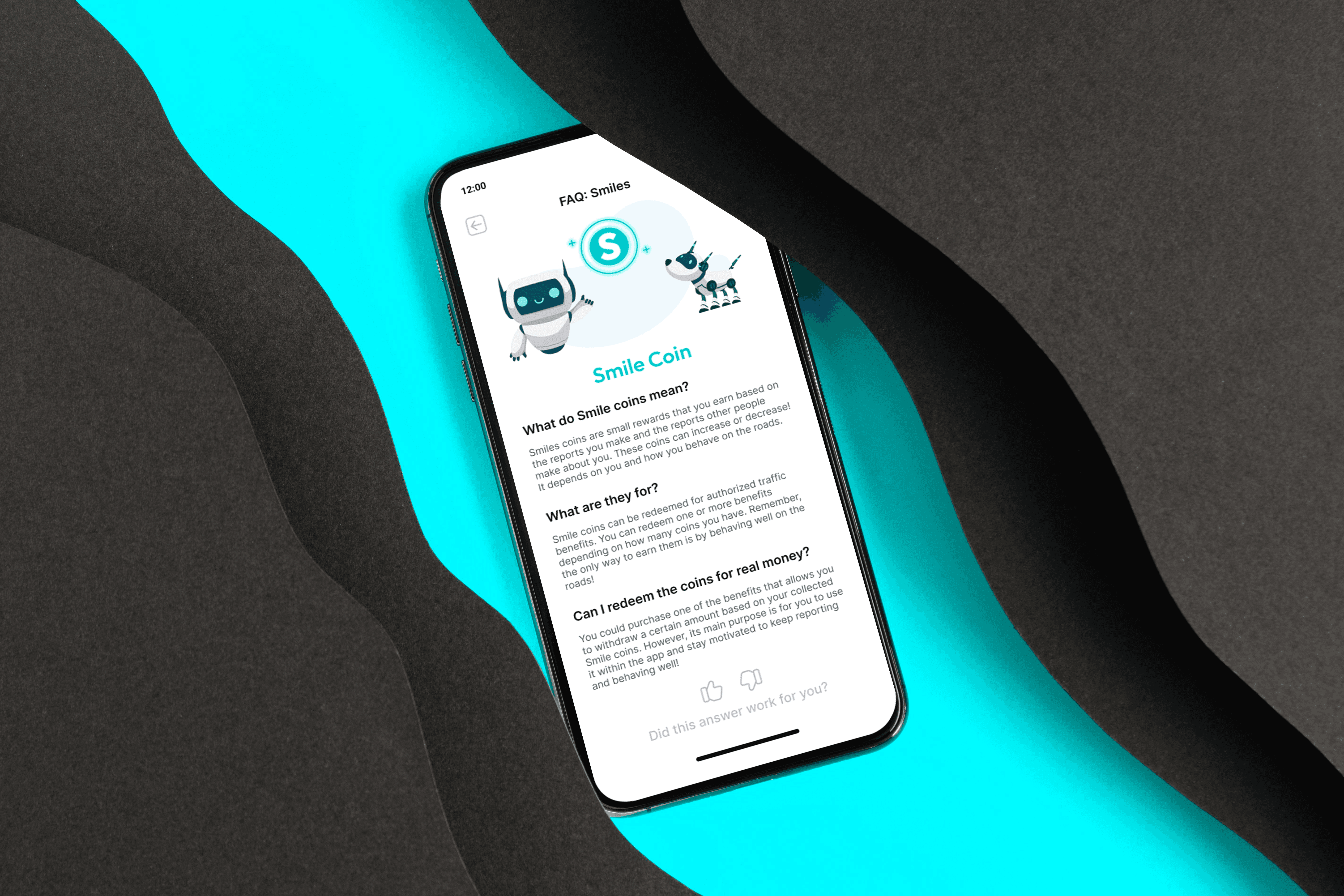
Drivision is a conceptual mobile platform designed to improve road safety by rewarding positive driving behavior. The app transforms responsible actions into measurable civic value — allowing users to accumulate points for safe driving, which can later be redeemed for government benefits such as traffic fine discounts or mobility privileges.
Role:
Product Designer
Industry:
Mobility (TIC)
Project Duration:
3 Months
Year:
2024
The Problem
Traffic accidents remain one of the leading causes of injury and death in urban environments.
In many cities, including Colombia:
Drivers frequently ignore traffic signals.
Aggressive driving behaviors are normalized.
Enforcement relies primarily on punishment.
There is little positive reinforcement for responsible behavior.
Current systems penalize bad behavior — but rarely reward good behavior.
The opportunity: What if safe driving generated tangible civic value?
Vision
Drivision reimagines urban mobility through incentive-based behavior change.
Instead of focusing on fines and penalties, the platform:
Tracks positive actions.
Rewards safe driving.
Encourages social accountability.
Creates a culture of civic recognition.
The concept introduces a utopian but structured system where:
Good driving earns points.
Points can be redeemed for public benefits.
Drivers are motivated by recognition and reward — not fear.
Design Experience
Behavioral Design Strategy
The foundation of the platform is based on three psychological principles:
Positive Reinforcement
Users receive points for responsible actions such as:
Respecting speed limits.
Stopping at red lights.
Avoiding sudden braking.
Not using the phone while driving.
Instead of punishment, the system encourages repetition through reward.
Social Accountability
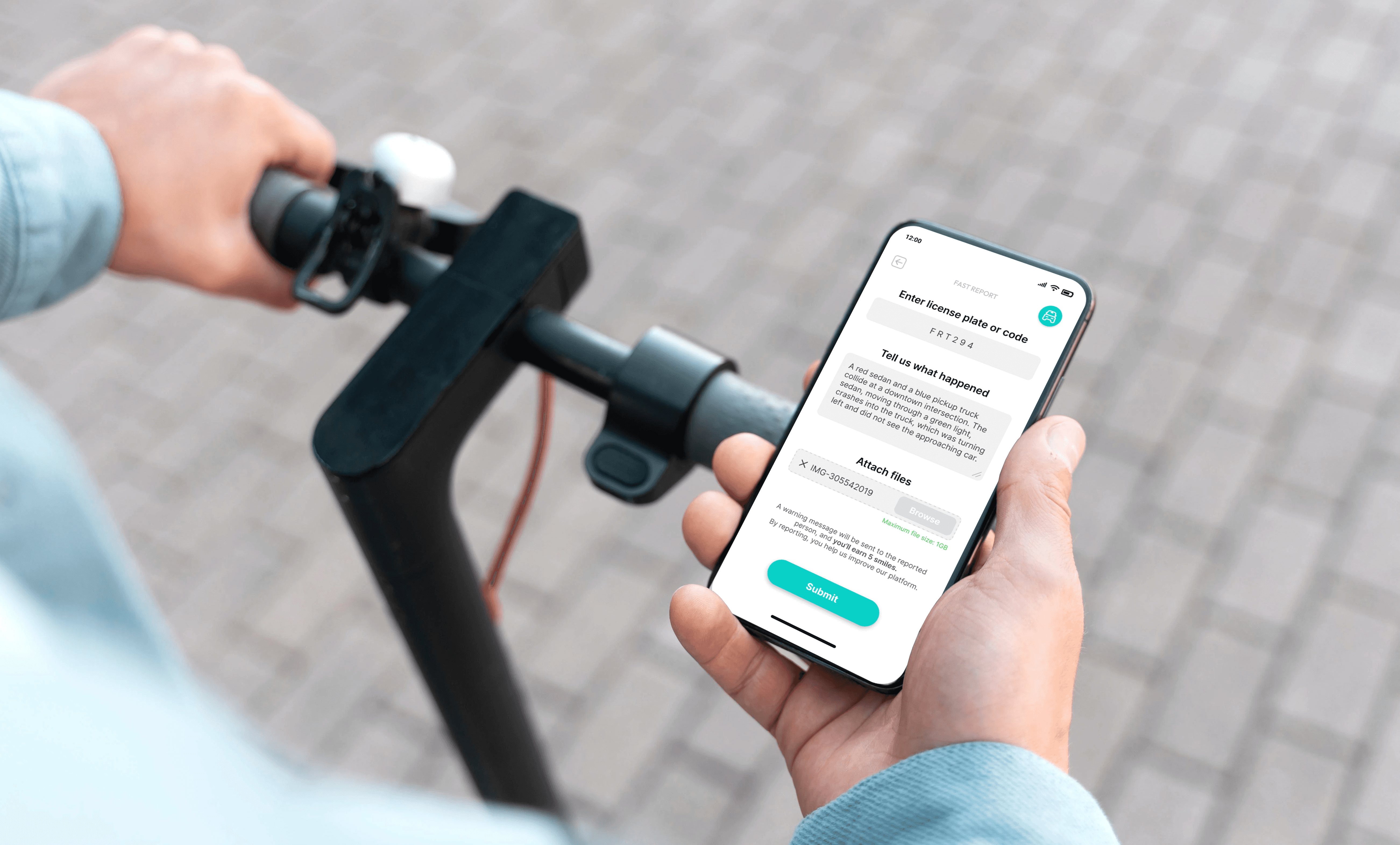
Users can report unsafe behavior using:
License plate number.
Vehicle ID.
National ID reference (conceptual).
This introduces peer-based monitoring while maintaining structured validation systems. The design carefully balances: Motivation vs. misuse risk.
Visible Progress & Status
Users have a driving score that reflects their civic performance.
Higher scores unlock:
Traffic fine discounts.
Mobility privileges (e.g., exemption from “Pico y Placa”).
Recognition badges.
Tiered status levels.
The app reframes driving as a measurable civic responsibility.
Design Challenges
This project required solving complex UX problems:
Preventing false reporting.
Avoiding gamification abuse.
Ensuring fairness.
Designing trust into the system.
Balancing authority and community.
Because this is a civic platform, trust is the core design element.
User Experience Design
Onboarding
Users are introduced to:
How points are earned.
How behavior is tracked.
What rewards can be redeemed.
Community guidelines.
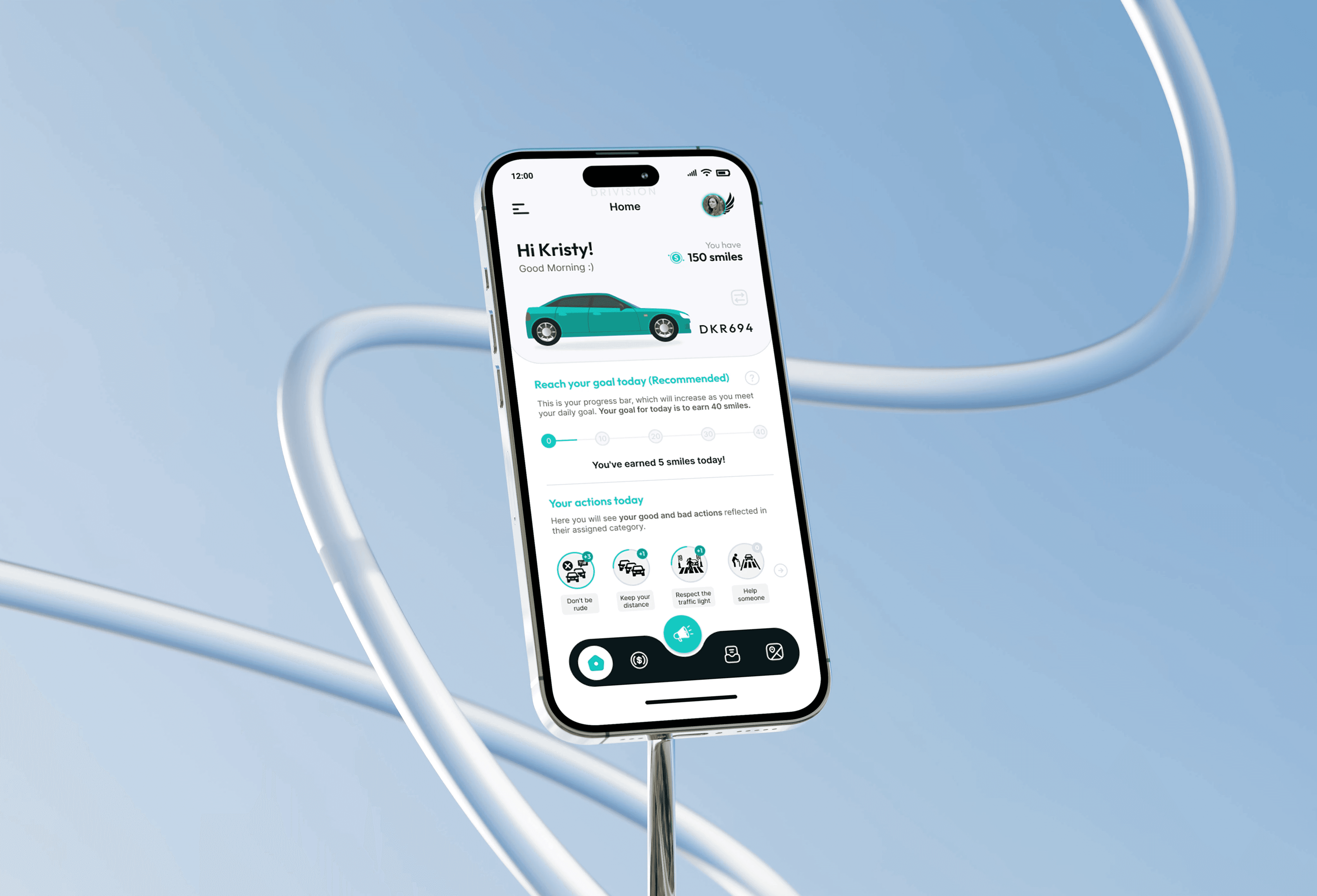
Dashboard
The main dashboard shows:
Driving score.
Weekly performance trends.
Points earned.
Available rewards.
Progress toward next tier.
The visual language is clean, official, and trustworthy — avoiding excessive gamification aesthetics.
Reporting System
The reporting flow was designed to:
Be quick.
Require validation inputs.
Prevent spam behavior.
Maintain clarity of consequences.
Reports trigger review mechanisms before affecting scores.
Rewards System
The rewards architecture is tier-based:
Bronze
Silver
Gold
Civic Ambassador
Each tier unlocks hypothetical government incentives. The system reinforces long-term behavior change rather than short-term competition.
Interaction Design
Mobile-first design was essential.
Driving context requires:
Minimal distraction.
Large interaction areas.
Clear typography.
Strong contrast.
During active driving, the app reduces interaction to near zero. It functions primarily as a passive tracker.
Ethical Considerations
Because Drivision interacts with:
Personal identity.
Public reporting.
Government benefits.
I designed around:
Data transparency.
User consent.
Clear scoring rules.
Abuse prevention mechanisms.
Even as a conceptual project, ethical UX thinking was prioritized.
Visual System
The UI combines:
Government-style credibility.
Clean, modern mobile aesthetics.
Status-based color coding.
Clear scoring indicators.
The goal was to feel official — not playful. Trust over entertainment.
Potential Impact
If implemented in a real-world environment, Drivision could:
Reduce traffic violations.
Encourage responsible driving culture.
Shift enforcement systems from punishment to reward.
Strengthen civic engagement.
The project explores how digital products can influence public behavior at scale.
Key Learnings
Behavioral change requires more than gamification.
Incentive systems must feel fair.
Civic products demand high trust architecture.
Transparency is essential when scores affect benefits.
If iterated further, I would:
Introduce a validation AI system for reports.
Add community verification models.
Conduct policy impact simulations.
Explore partnerships with insurance providers.